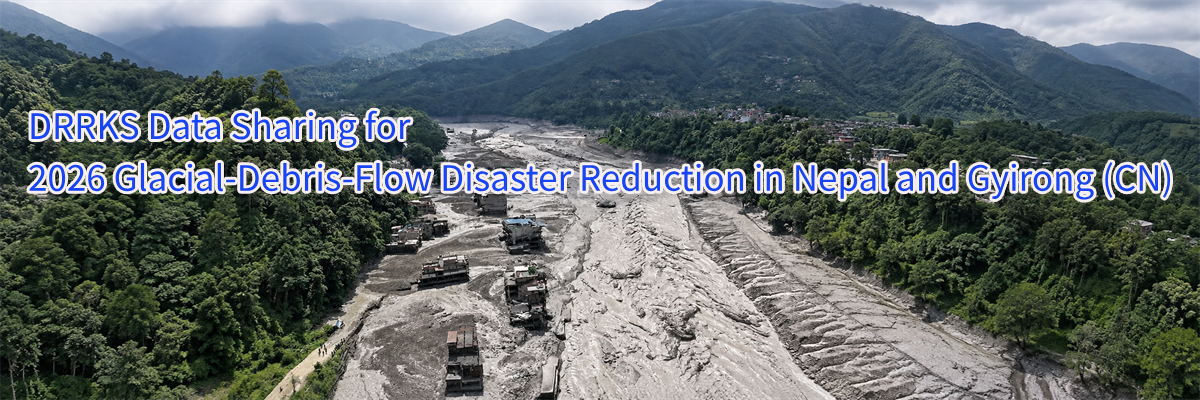
The China–Nepal Himalayan border region is a vital trans-Himalayan corridor connecting the Tibetan Plateau with South Asia. The Gyirong–Rasuwagadhi crossing is an important gateway for trade, tourism and people-to-people exchanges between China and Nepal. Located within the active collision zone of the Indian and Eurasian plates, the region is characterized by extreme topographic relief, extensive glaciers, loose glacial deposits, steep river valleys and intense monsoon rainfall, making it highly susceptible to ice–rock avalanches, landslides, debris flows and flash floods.
On the morning of August 26, 2026, a catastrophic ice–rock avalanche, debris flow and flash flood occurred near the China–Nepal border. The U.S. Geological Survey recorded a seismic signal equivalent to a magnitude 5.2 event at 28.271°N, 85.515°E. Subsequent analyses indicated that the seismic signal was generated by a rapid slope failure involving a glacier. Investigations by China’s Ministry of Natural Resources indicated that a high-altitude glacier collapse in Nepal generated a fast-moving ice–rock avalanche, which entrained large volumes of glacial and valley deposits and evolved into a destructive debris flow.
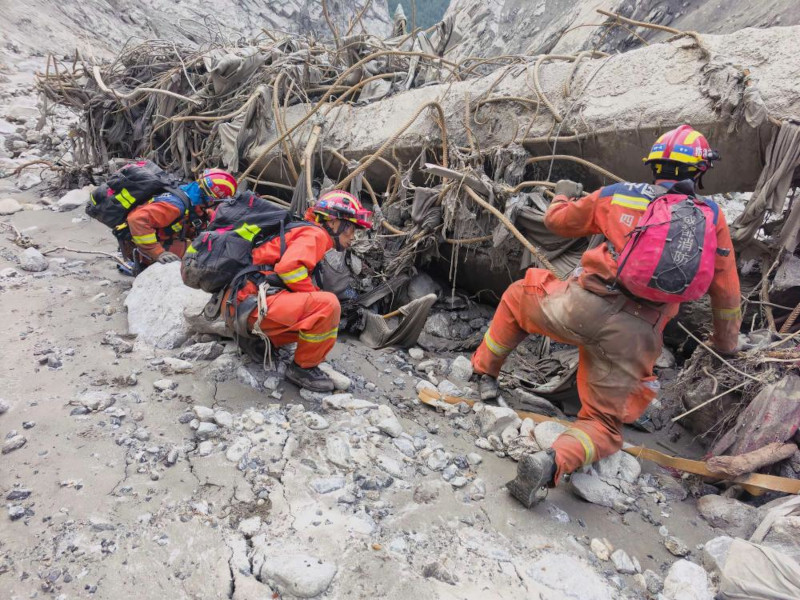
The debris flow entered the Donglin Zangbo–Lende Khola and Trishuli river systems, travelled nearly 100 kilometres downstream and severely affected Gyirong Port in Xizang, China, as well as the Rasuwagadhi border crossing and several districts of Nepal. Settlements, roads, bridges, border facilities and hydropower infrastructure were buried, washed away or seriously damaged. As of September 10, Nepal had reported 1,367 recovered bodies, approximately 2,498 people still unaccounted for and more than 8,000 people rescued. On the Chinese side, 43 people had been confirmed dead as of 18:00 on September 5.
To support emergency response, IKCEST-DRR organized data collection and consolidation quickly after the disaster. Through this data sharing column, IKCEST-DRR would provide knowledge services to relevant emergency disaster relief, post reconstruction, and research personnel.
- The Composite Imagery Dataset of Sentinel-2 in Nepal and Gyirong County
- Nepal-Gyirong 2021 ESA WorldCover Dataset
- Nepal-Gyirong 2025 ESRI Land Cover Dataset
- Google Dynamic World Land Cover Dataset before the 2026 Debris-Flow Disaster
- The Composite Imagery Dataset of Sentinel-1 in Nepal and Gyirong County
- The Composite Imagery Dataset of Landsat in Nepal and Gyirong County
- MODIS Monthly Land Surface Temperature (LST) Dataset for Nepal and Gyirong
- MODIS Monthly Evapotranspiration (ET) Dataset for Nepal and Gyirong
- MODIS Historical Disaster Imagery for Nepal
- Historical Disaster Data for Nepal
- Annual Surface Water Distribution Dataset for Nepal and Gyirong, 2016-2024
- WRB2 Soil Type Dataset for Nepal and Gyirong
- Annual Surface Soil Moisture Dataset for Nepal and Gyirong, 2016-2024
- Nepal-Gyirong population count dataset
- Nepal-Gyirong population density dataset
- Nepal-Xigaze GDP dataset
- Analysis Extent - Rasuwa and Nuwakot
- Mudflow and Rockflow Extent - Rasuwa and Nuwakot
- Quarterly Nepal–Gyirong Vegetation Coverage Index in 2020
- Data on the Distribution of Natural Forest Resources in Nepal and Gyirong
- Historical GLOF Information in Nepal and Gyirong
- Nepal and Shigatse NOAA Dataset (1990–2024)
- Nepal-Gyirong DEM Dataset
- Nepal-Gyirong Administrative Division Dataset
- The Distribution of Major Mineral Deposits in Nepal–Gyirong